Dental Tech: Product Strategy
Challenge
An international dental tech start-up invented a novel cavity detection product that they hoped would change the game for US dental providers. Paige supported them to:
Conduct exploratory research to uncover the challenges and unmet needs dental providers had around cavity detection methods and their associated tools and technology.
Conduct evaluative research to understand the ideas and perceptions dental providers had around the product features, packaging and cost.
Define the positioning value proposition of the product to US clinics, customer profiles to target upon launch, and where they should focus product development efforts in future iterations.
Method
Paige served as the lead researcher and strategist for this initiative, designing a three-phased scope that included:
Phase 1 — Executive stakeholder alignment workshop: Led executive leaders to align on research objectives, how to measure success for the initiative, and uncovered underlying hypotheses approaching the US market and product landscape.
Phase 2 — Exploratory Interviews: Conducted 20 in-depth interviews with dental providers (dentists, hygienists, technicians) to understand their current context and pain points with the products they use for cavity detection.
Phase 3 — Evaluative User Testing: conducted 20 testing sessions with dental providers across the US to understand how and in what context they might use the product, along with their perceptions of the product, its packaging and cost. They completed research activities such as attribute ranking to quantify product features.
OUTCOME
Results disproved many assumptions the team held around the product use case and beneficial features. Paige skillfully delivered actionable insights that:
Suggested changes to product features, packaging, and the cost structure to best align with the needs of dental providers.
Detailed the service structure and technology the client needed to support the product, which was currently nonexistent.
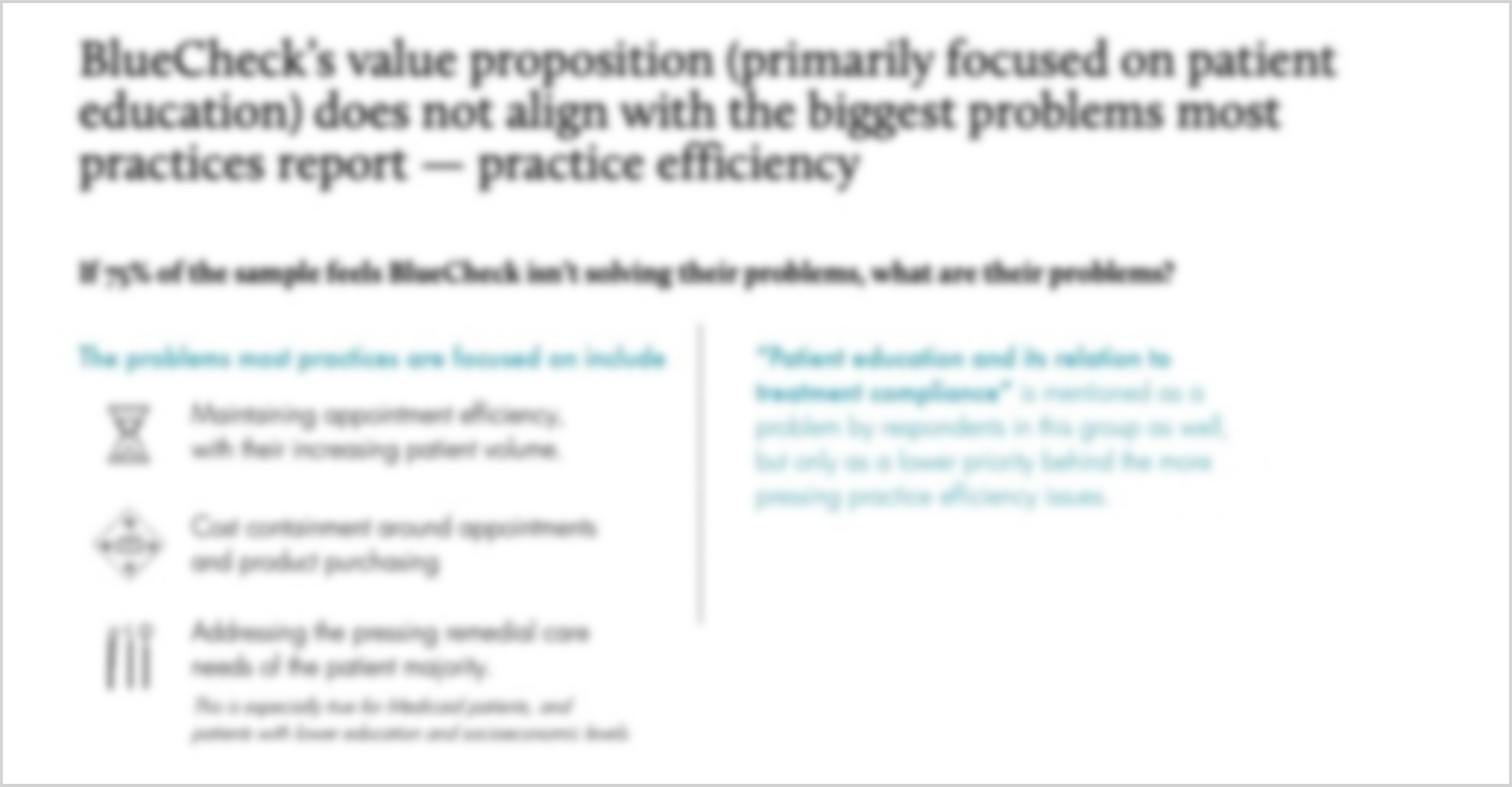
Articulated a value proposition that accurately captured an unanticipated product-market fit for a dental education audience.
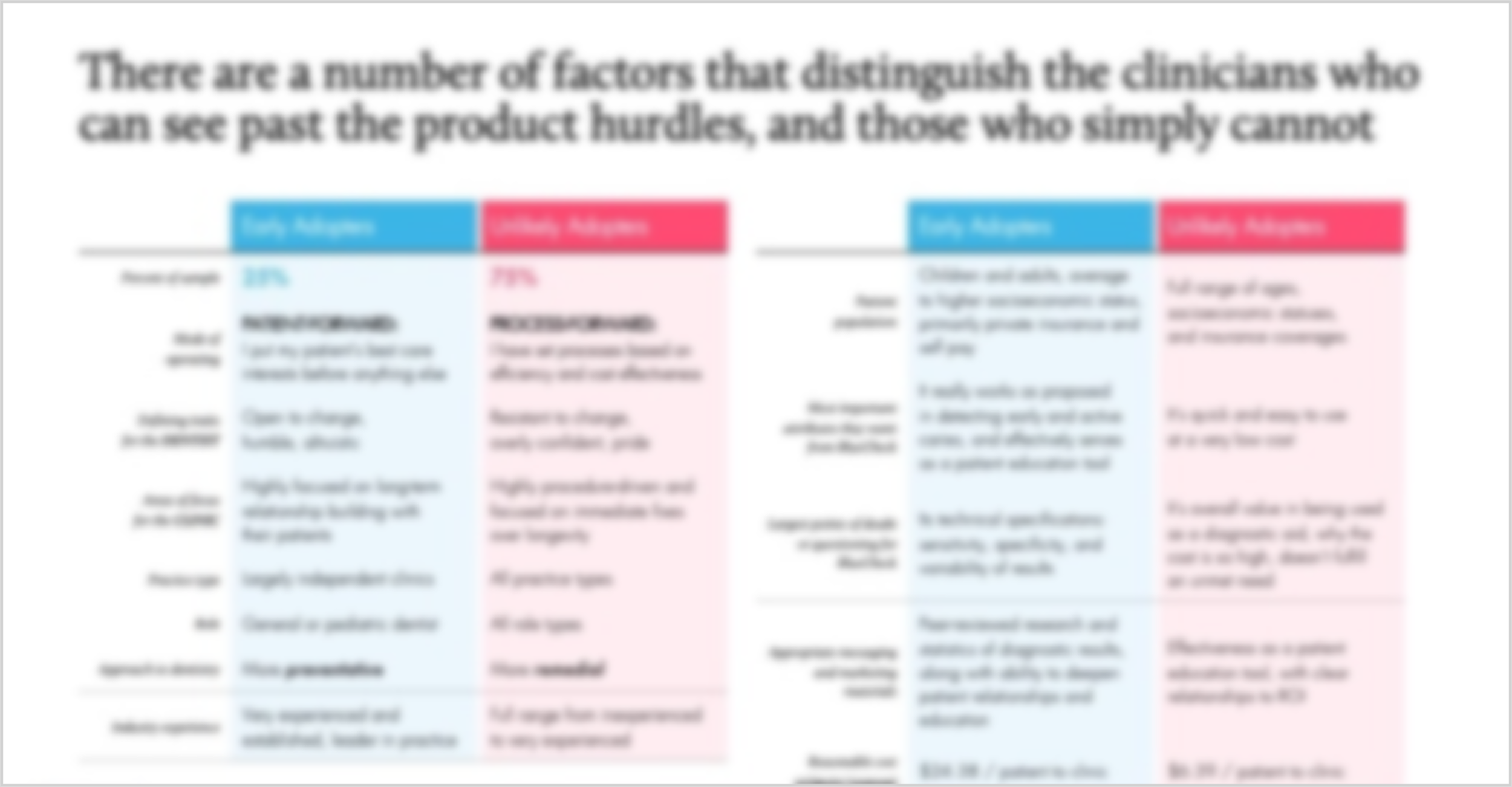
Identified attributes of early product adopters and created compelling marketing plays to target audience segments.
The start-up implemented feature revisions and eventually received FDA approval for their device. They launched in select US clinics with plans for expansion. Later, they partnered with two competitors to enhance the technical capabilities of their offering.